AI STicker Studio
Case StudyProject Role | Creative DirectorThe brief I gave the team wasn't about AI. It was about ease of access.
Most creative activations reward people who are already good at the thing. Draw something, show it off. But what about the person who hasn't picked up a pencil since third grade? They hesitate. They opt out. Or they participate and walk away feeling embarrassed instead of celebrated.
My challenge to the team was to flip that. Use AI not as a novelty, but as a great equalizer. A way to guarantee that every sketch, regardless of skill, became something worth keeping. The goal was simple: remove the fear of the blank page and replace it with the feeling of success. Give everyone in that room the experience of being a good artist, maybe for the first time.
The Approach
The original concept leaned on AI the way a lot of activations do. Interesting, but it still asked people to lead with their drawing ability. I pushed the team toward a different frame: the human input is the spark, AI is the craft. Whatever you draw, the output is polished, personal, and yours.
What It Taught Me About AI and Design
The most interesting thing about this project wasn't the technology. It was watching people's faces change between the moment they started drawing and the moment they saw the result. The hesitation, the vulnerability, the low expectations. And then the surprise.
That moment is a design outcome. And it pointed at something bigger than creativity: participation. The real barrier at most activations isn't skill, it's the fear of being seen trying. When the output is guaranteed to be good, that fear goes away. Everyone belongs in the room. Everyone has something to contribute to the collective canvas. AI, used intentionally, doesn't lower the barrier to making things. It lowers the barrier to belonging.
The Experience
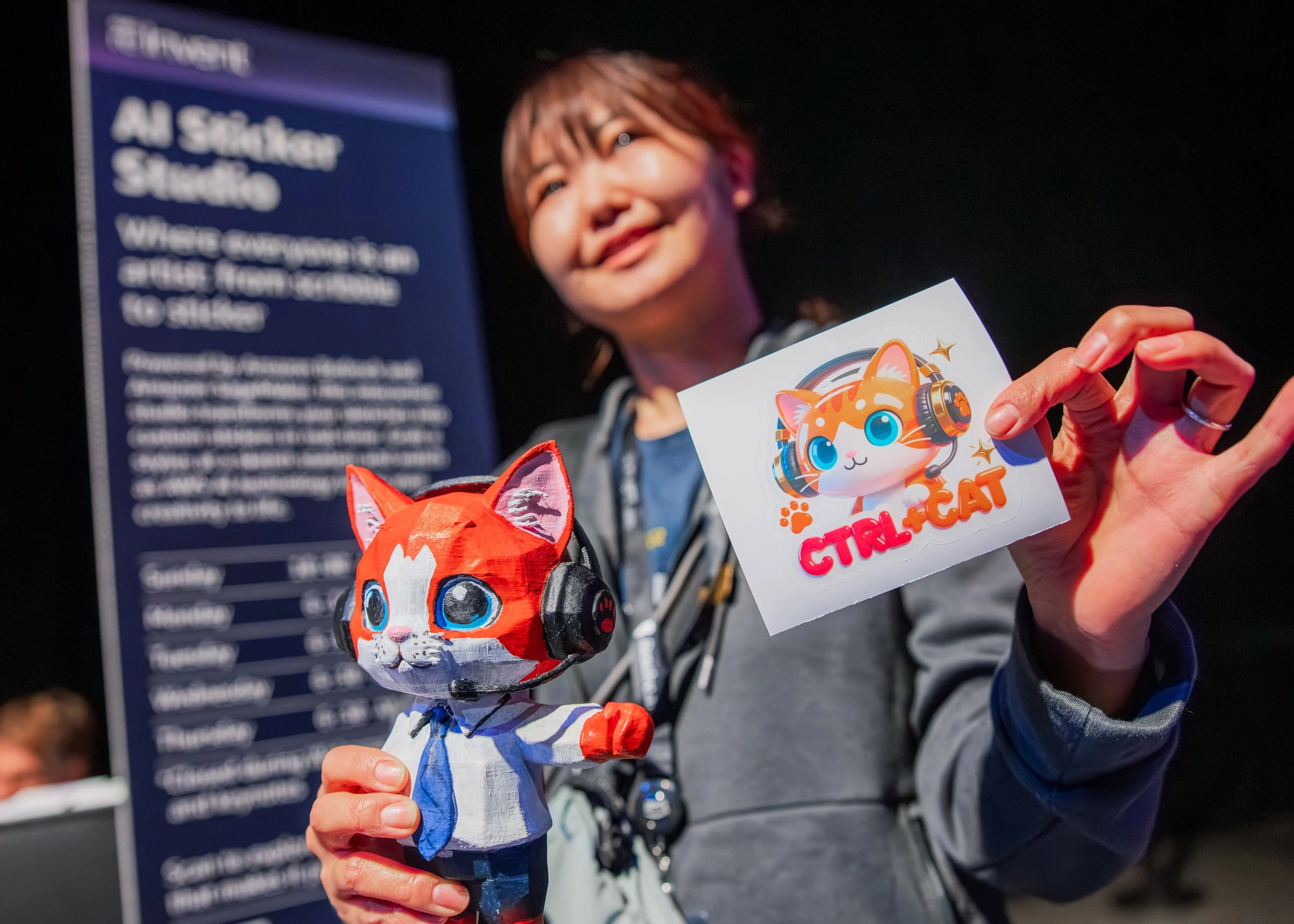
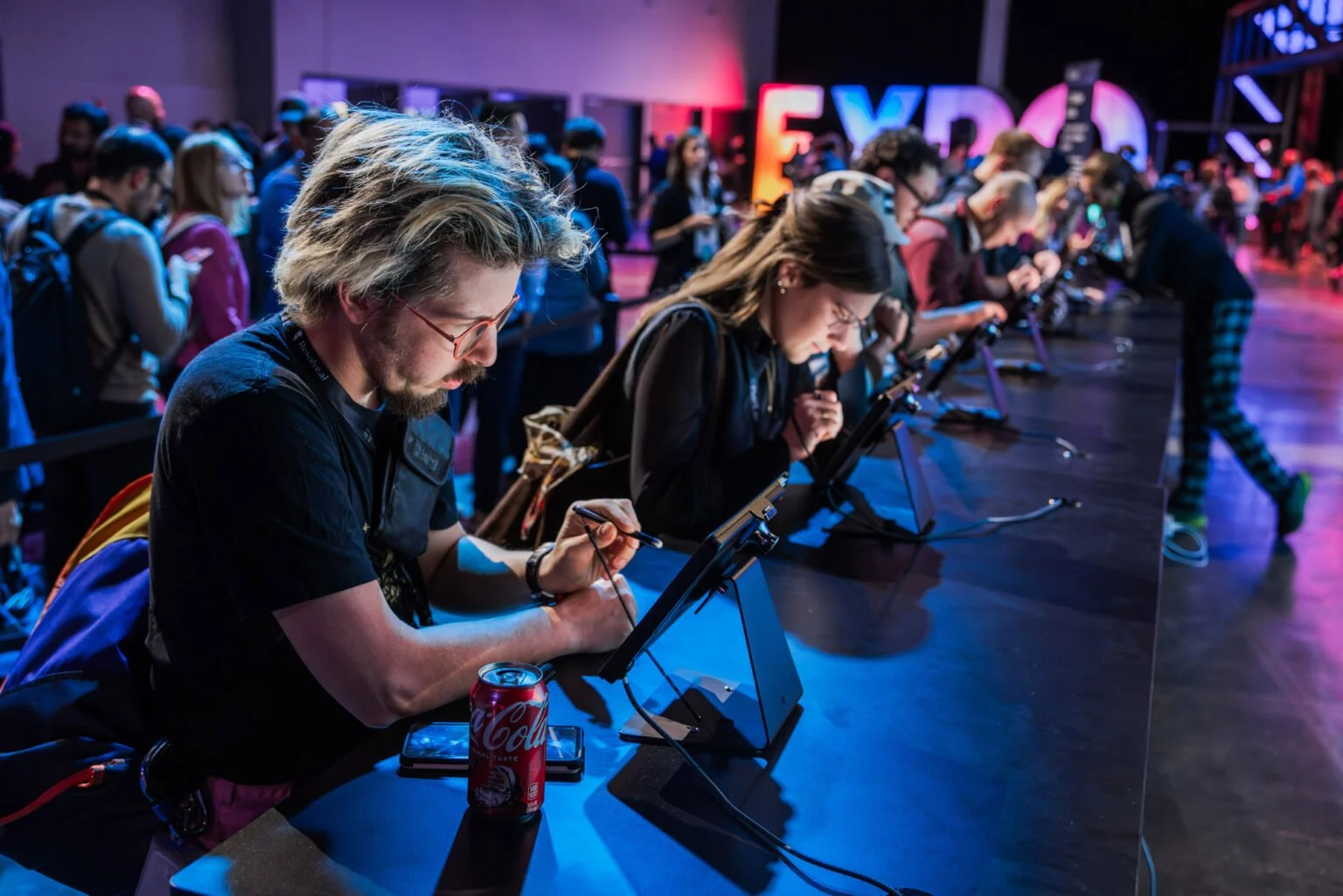
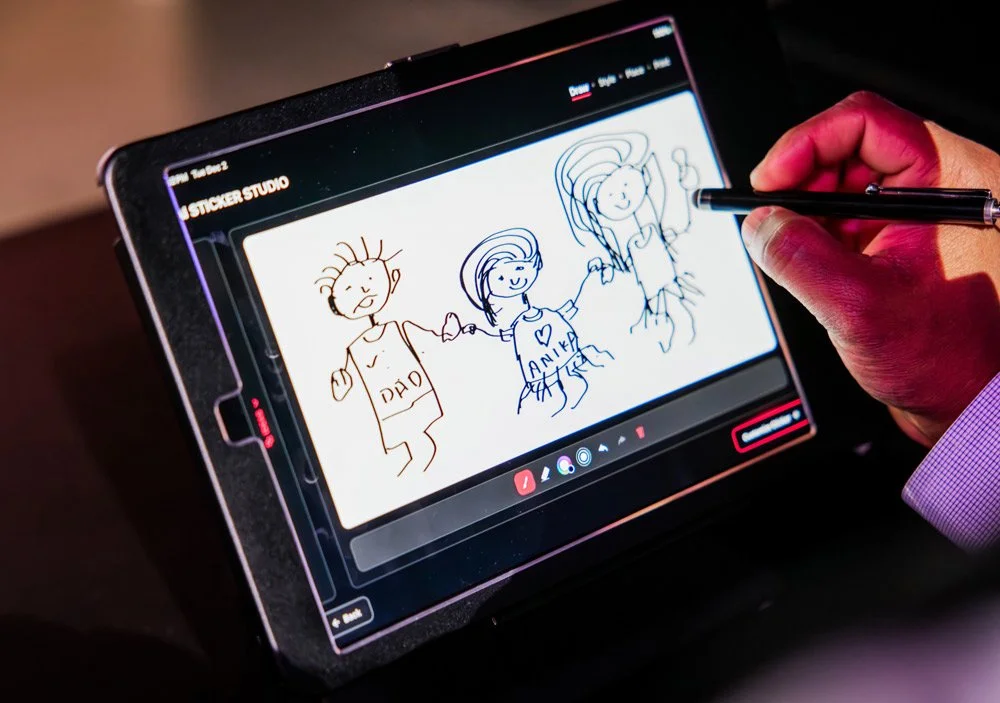
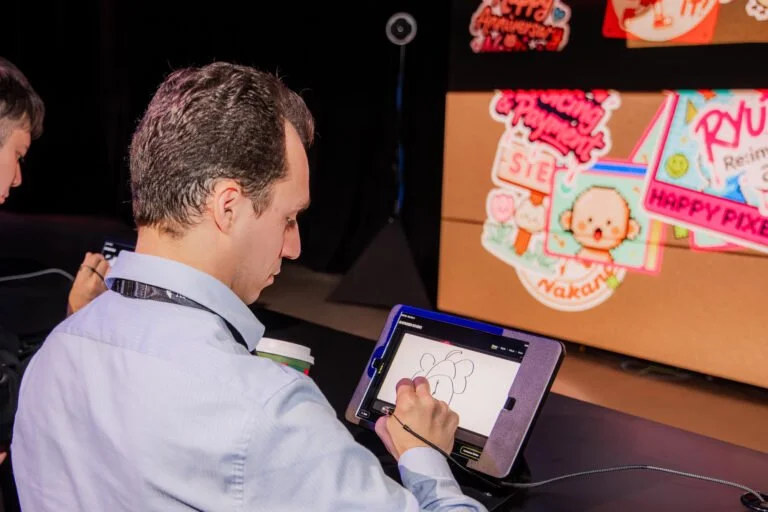
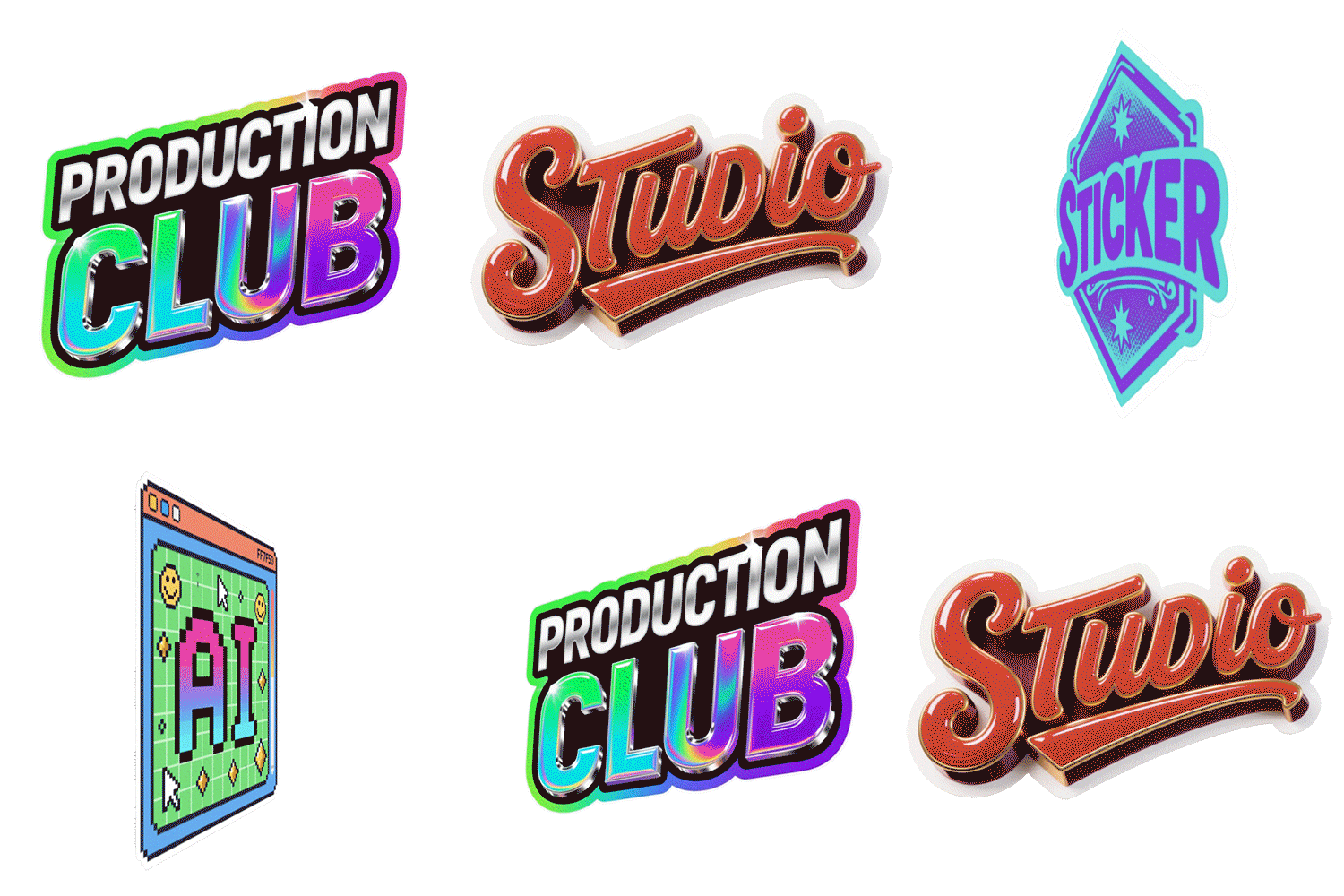
From that reframe, I worked with Production Club to build the experience out. Attendees grabbed a stylus at a touchscreen station and sketched anything: a company logo, an inside joke, a weird doodle drawn under pressure with a hundred people watching. Built on Amazon Bedrock and Amazon Nova, the experience transformed each sketch in real time into a custom sticker, styled across 12 design presets ranging from Japanese kawaii to graffiti wild-style. The attendee chose their aesthetic. AWS technology delivered the execution.
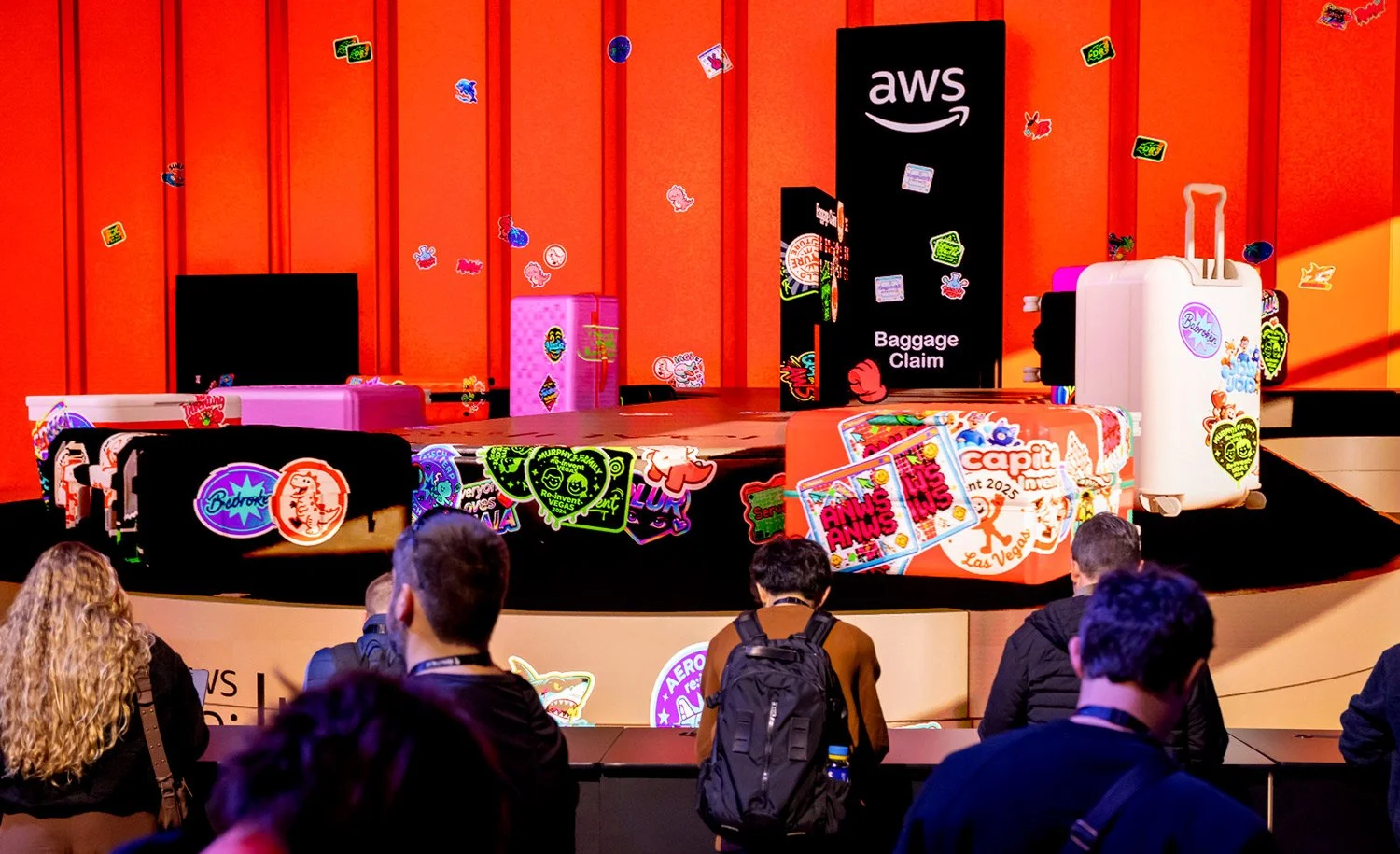
Each finished sticker was placed into a massive shared 3D world built in Unreal Engine and cast onto a 16-foot LED screen on the show floor, a collective canvas that grew more alive every hour across five days. The final stop was a print station where every attendee left with a physical copy of what they made.
Over 3,000 sketches were transformed. Every single one became something extremely polished.
From One Activation to a Scalable System
The Sticker Studio was built for re:Invent, but the design intent from the start was that it shouldn't stay there. Part of my role was ensuring the experience could travel: to re:Inforce, to AWS Summits globally, to any event where we wanted to give attendees something to make and take home. That meant the underlying framework needed to be flexible enough to adapt to different environments, footprints, and audiences without losing the core of what made it work.
The 12 style presets, the modular station layout, the print-and-go endpoint. Each of those decisions was made with portability in mind. A great activation that only works once isn't a system. It's a one-off. The goal was to build something replicable without making it feel like a copy.
See the Full Experience
The visual story of the AI Sticker Studio, including video of the activation in action, was documented by Production Club, the agency I partnered with to bring it to life. View the project at production.club.